

Commentary
The supposed threats from China and Russia pose far less of a danger to both Greenland and the Arctic than the prospect of an unscrupulous takeover of the island.
Andrei Dagaev
{
  "authors": [
    "Denis Kishinevsky"
  ],
  "type": "commentary",
  "blog": "Carnegie Politika",
  "centerAffiliationAll": "",
  "centers": [
    "Carnegie Endowment for International Peace",
    "Carnegie Russia Eurasia Center"
  ],
  "englishNewsletterAll": "",
  "nonEnglishNewsletterAll": "",
  "primaryCenter": "Carnegie Russia Eurasia Center",
  "programAffiliation": "",
  "programs": [],
  "projects": [],
  "regions": [
    "Belarus",
    "Europe"
  ],
  "topics": [
    "EU Foreign Policy",
    "Foreign Policy",
    "EU",
    "Security",
    "Trade"
  ]
}
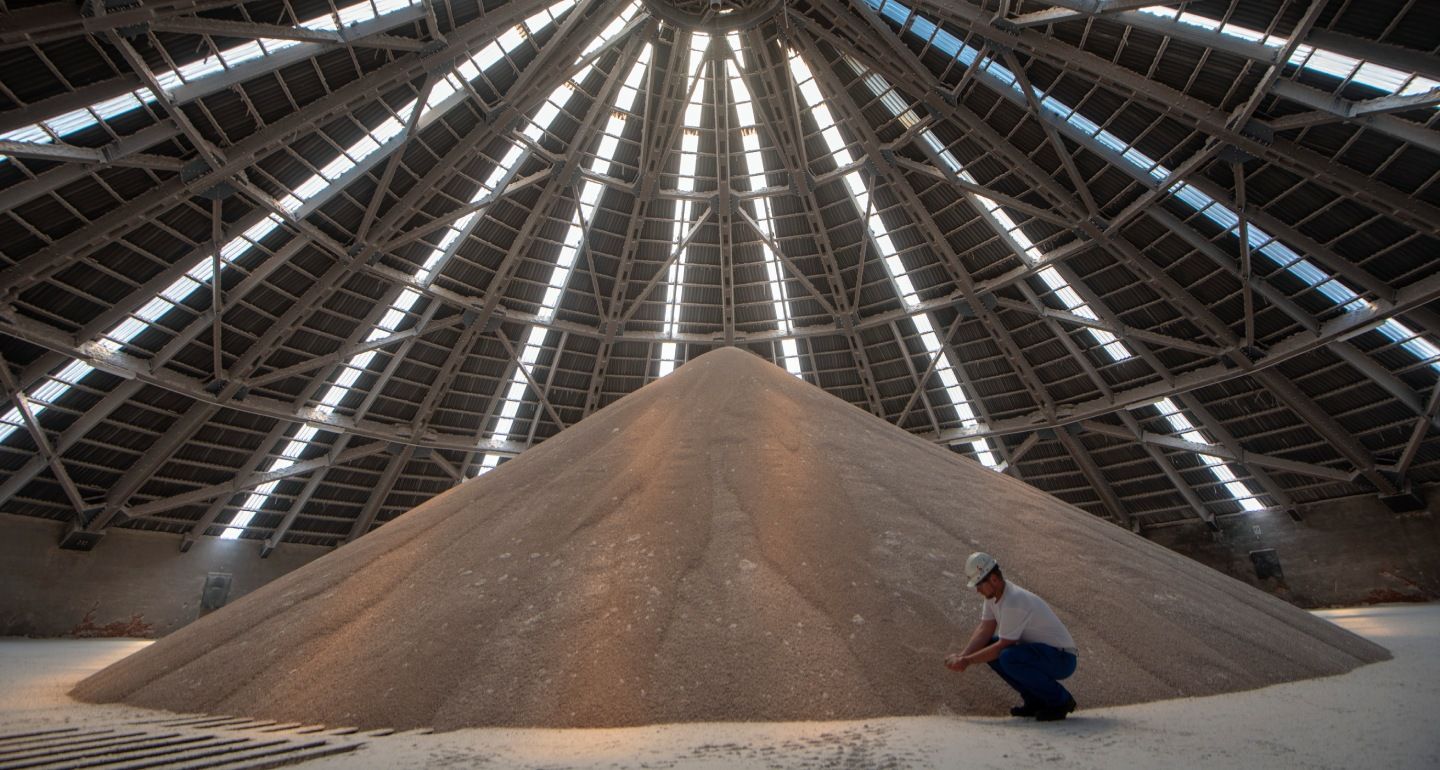
What should happen when sanctions designed to weaken the Belarusian regime end up enriching and strengthening the Kremlin?
The lifting of U.S. sanctions on Belarusian potash in December 2025 leaves Lithuania facing the dilemma of whether it should again allow the fertilizer to be exported through its territory. There was a time when this transit generated millions of dollars for Lithuanian railways and the country’s port in Klaipeda. But Vilnius blocked Belarusian potash from its territory after contested Belarusian leader Alexander Lukashenko brutally crushed opposition protests in 2020.
Extensive economic ties between Lithuania and Belarus in the 2010s culminated in state-owned potash producer Belaruskali acquiring a 30 percent stake in Klaipeda’s bulk cargo terminal, cementing Klaipeda as the main port through which Belarusian potash was exported. That took place despite the Kremlin’s disapproval. Russian President Vladimir Putin repeatedlyraised the issue with Lukashenko, urging him to use Russian ports for potash exports, but Lukashenko chose the Lithuanian route: both for economic reasons and to reduce Belarus’s dependency on Russia.
As a result, there was a point when shipments from Belarus accounted for a third of Klaipeda’s turnover, and the port became the biggest in the Baltic region, eclipsing Riga and Tallinn. The cooperation between Minsk and Vilnius was described as “pragmatic,” and political differences were not dwelled on. In 2013, Lithuania’s then prime minister Algirdas Butkevičius evensaid that the two countries were building a “shared economy.”
All of that changed after Lukashenko’s violent suppression of opposition demonstrations and Minsk’s participation in Russia’s full-scale invasion of Ukraine two years later. Both the United States and the European Union imposed sanctions on Belaruskali. Lithuania interpreted the restrictions as an imperative to halt potash transit. This also fitted well with the then government in Vilnius’s declaration that it wanted to pursue a values-based foreign policy.
The economic consequences meant that the decision immediately elicited criticism. Klaipeda’s bulk cargo terminal—one of the biggest of its kind in Europe—almost came to a standstill, and Klaipeda’s turnover in 2022 (the first year without potash exports)fell about 20 percent. Lithuanian Railways lost about 100 million euros a year, and the government was forced to provide compensation.
Meanwhile, Belarusian potash exports continued—only via Russian ports, primarily Ust-Luga and St. Petersburg. In other words, the profits from potash transit were redirected from Lithuania to Russia.
The situation has been further complicated by an international arbitration case brought by Belaruskali. The company claims Vilnius illegally deprived it of access to Klaipeda, and is seeking damages of 12 billion euros. No decision is expected before 2027, but Vilnius has already spent hundreds of thousands of euros on legal fees—with no guarantee of a favorable outcome.
In 2025, the United States sought a rapprochement with Belarus, negotiating the release of some Belarusian political prisoners in return for easing sanctions, including those against Belaruskali. For U.S. President Donald Trump, this was a way of showing that Washington still wields influence in Eastern Europe, as well as improving his chances of getting the Nobel Peace Prize. It’s also possible there was an economic motive: letting Belarusian potash reenter the international market could allow the United States toreduce its dependence on fertilizer from Canada (relations between Washington and Ottawa are tense).
However, Washington’s decision poses a dilemma for Vilnius. If Belarusian potash is going to return to international markets, does it help achieve the aim of European sanctions if it transits through Russia? On the one hand, the Lithuanian establishment traditionally follows Washington’s lead: a tactic it believes means enhanced security guarantees. On the other hand, allowing potash transit without any change to the Belarusian regime would be difficult to align with a values-based foreign policy, which is supported by right-wing parties in Lithuania, the mainstream media, and many think tanks there.
On paper, a policy change is possible, as Lithuania is currently ruled by center-left forces and the country’s left-wing parties have traditionally taken a more pragmatic approach to Russia and Belarus. Lithuanian Prime Minister Inga Ruginienė hasnot ruled out that Washington—as part of its negotiations with Minsk—could ask Lithuania to restart transit. In that case, she has said that the Lithuanian government would make a decision based on the circumstances.
Even Lithuania’s right-wing opposition appears to be prepared to countenance a discussion about restarting transit. There has been a suggestion that a levy could be imposed on each transported ton of potash to raise money for the country’s defense budget and for Ukraine. “Let Lukashenko explain to Putin why he’s funding the Ukrainian army,”said conservative deputy Matas Maldeikis in December. Defense Minister Robertas Kaunas has made a similarsuggestion, proposing that all transit profits could be channeled to Ukraine.
However, EU sanctions against Belarus (and Belaruskali) are still in place, and it would require a unanimous decision by all EU members for them to be lifted. And in Lithuania, foreign policy is largely determined by the president, Gitanas Nausėda, who has already said that values rather than pragmatism should determine whether transit is restarted. It’s possible Nausėda’s position is partly self-serving. After all, he was criticized in 2019 for being tooopen to dialogue with Lukashenko. He was evenaccused of indirectly lobbying for companies benefitting from transit in 2020 when Lithuania suggestedexcluding Belarusian potash from EU sanctions.
For the moment, Vilnius does not seem inclined to re-allow potash transit. Officials in the Foreign Ministry and broader government have stressed that potash exports generate too much money for the Belarusian regime. Their position is supported by the exiled Belarusian opposition. EU sanctions also remain in force, and the political relationship between Brussels and Minsk is in the deep freeze.
Nevertheless, the very discussion raises some broader questions about the effectiveness of Western sanctions. What happens when sanctions are no longer helping to further their stated goal? How have measures designed to weaken the Belarusian regime ended up strengthening Moscow?
Carnegie does not take institutional positions on public policy issues; the views represented herein are those of the author(s) and do not necessarily reflect the views of Carnegie, its staff, or its trustees.
The supposed threats from China and Russia pose far less of a danger to both Greenland and the Arctic than the prospect of an unscrupulous takeover of the island.

Andrei Dagaev
Western negotiators often believe territory is just a bargaining chip when it comes to peace in Ukraine, but Putin is obsessed with empire-building.

Andrey Pertsev

Unexpectedly, Trump’s America appears to have replaced Putin’s Russia’s as the world’s biggest disruptor.
Alexander Baunov
Baku may allow radical nationalists to publicly discuss “reunification” with Azeri Iranians, but the president and key officials prefer not to comment publicly on the protests in Iran.

Bashir Kitachaev
For years, the Russian government has promoted “sovereign” digital services as an alternative to Western ones and introduced more and more online restrictions “for security purposes.” In practice, these homegrown solutions leave people vulnerable to data leaks and fraud.

Maria Kolomychenko