

Commentary
For a real example of political forces engaged in the militarization of society, the Russian leadership might consider looking closer to home.
James D.J. Brown
{
  "authors": [
    "Galiya Ibragimova"
  ],
  "type": "commentary",
  "blog": "Carnegie Politika",
  "centerAffiliationAll": "",
  "centers": [
    "Carnegie Endowment for International Peace",
    "Carnegie Russia Eurasia Center"
  ],
  "englishNewsletterAll": "",
  "nonEnglishNewsletterAll": "",
  "primaryCenter": "Carnegie Russia Eurasia Center",
  "programAffiliation": "",
  "regions": [
    "Uzbekistan",
    "Central Asia"
  ],
  "topics": [
    "Political Reform",
    "Domestic Politics"
  ]
}
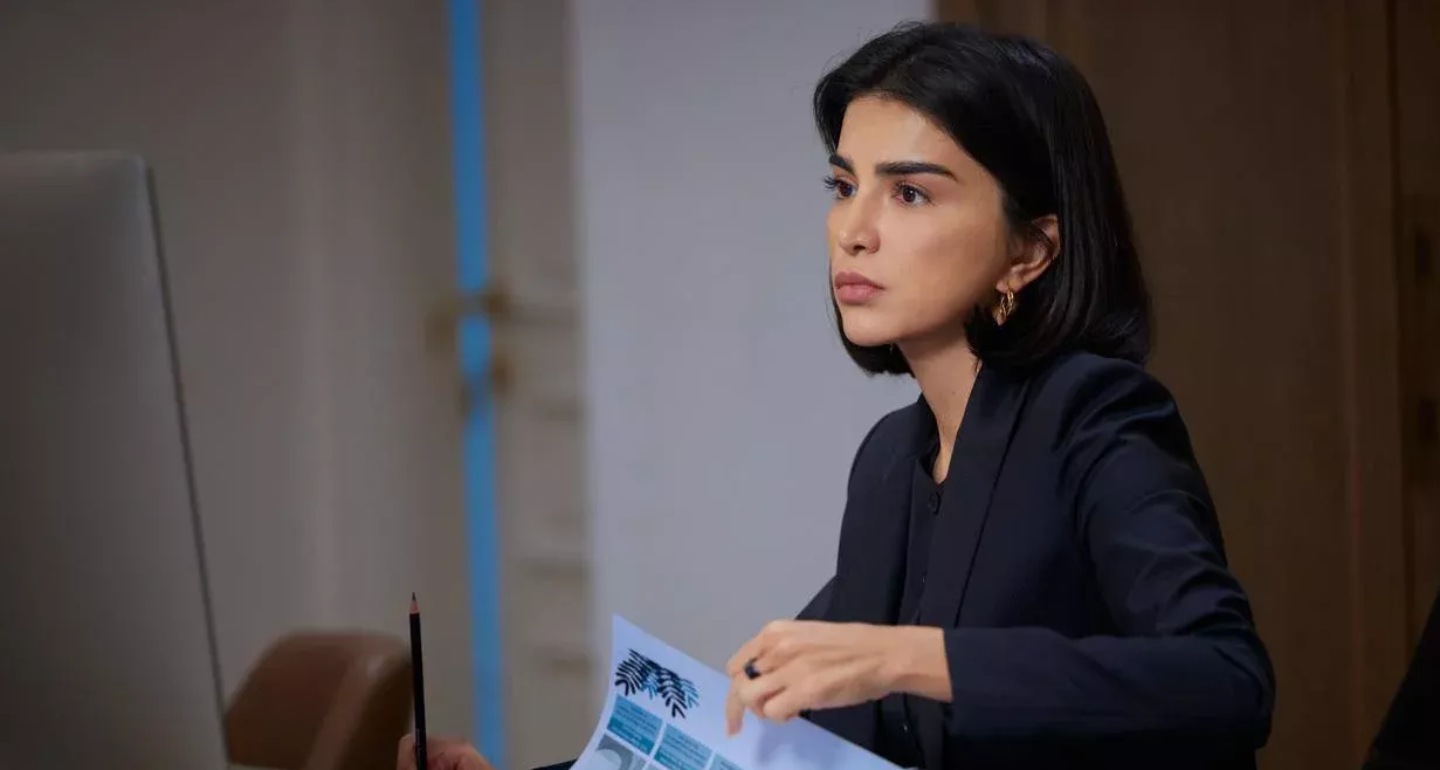
Source: Getty
Having failed to build a team that he can fully trust or establish strong state institutions, Mirziyoyev has become reliant on his family.
At the start of his rule, Uzbek President Shavkat Mirziyoyev sought to cultivate the image of a reformer to contrast with his repressive predecessor, Islam Karimov. But after almost a decade in power, Mirziyoyev is increasingly embracing Karimov-era methods, and has even re-established elements of a personality cult. He is also giving more and more power to his family, particularly his daughter, Saida, the current head of the presidential administration.
In contrast to the isolation of the Karimov period, Mirziyoyev initially sought to portray himself as opening up Uzbekistan to the world. His concept of “Uzbekistan 2.0” was supposed to see a liberalization of the economy, abolition of currency controls, reform of the banking and taxation systems, privatization of state-owned enterprises, and the expansion of political rights and freedoms.
After the secrecy, paranoia and over-regulation of the late Karimov period, the reforms had an immediate effect. Foreign investment flooded in, a construction boom got underway, business rules and regulations were simplified, tourism is developing, and poverty and unemployment have fallen. Uzbekistan began to build ties abroad, and regularly hosts summits, festivals, and sports competitions.
The climate of fear that was pervasive under Karimov also dissipated. Mirziyoyev curtailed the powers of the security services, and changed their leaders, appointing Batyr Tursunov, the father of his son-in-law, deputy head of the State Security Service. He also empowered a new generation of technocrat officials, who operated in a different way—using social media, speaking regularly to journalists, and engaging with society at large. Over time, however, the reforms began to run out of steam, and the authorities ultimately decided to return to the tried-and-tested practices of the Karimov era.
Uzbek officials also began to notice Karimov’s rhetoric resurfacing in Mirziyoyev’s speeches—in particular a tendency to praise his own achievements. This resulted in the realization that flattery and demonstrative loyalty were key to people retaining their positions. Now, speeches by officials tend to begin with lengthy expressions of gratitude to the head of state, and Mirziyoyev’s photograph is always on the front page of the newspapers.
The president has also increasingly tended to distribute top government jobs to family members. Shortly after Mirziyoyev became president, he appointed his daughter Saida to oversee the communication sector within the presidential administration, and her husband, Oybek Tursunov, to be deputy head of the presidential administration. He made his younger daughter, Shahnoza, deputy head of the National Agency for Social Protection, and her husband Otabek Umarov deputy head of the Presidential Security Service. Mirziyoyev’s wife, Ziroat Hoshimova, was handed oversight of health provision and pharmaceuticals, and was also rumored to be playing a key role in government hirings and firings.
All of this was reminiscent of the Karimov period, when the president’s family accrued immense money and influence. Karimov’s older daughter, Gulnara, owned major business assets, including those with foreign financing. Timur Tillyaev, the husband of Karimov’s younger daughter, controlled the large Abu Sahiy market in Tashkent. However, the political influence of Karimov’s family was always limited, and Gulnara’s attempts to carve out a bigger political role led to a conflict with security officials, a trial, and house arrest. In 2019, she was moved to an ordinary prison to serve out her sentence.
Mirziyoyev’s family has always seemed less inclined to rifts than Karimov’s, and he likely saw it as a source of political support. This was particularly true at the start of his rule, when there were few people he could trust, and it was unclear whether Karimov-appointed officials were loyal.
Subsequently, the role of Mirziyoyev’s family grew as a result of two crises: the use of force to put down protests in Karakalpakstan in 2022; and an energy crisis months later that left some Uzbeks without heating or electricity. These events tarnished Mirziyoyev’s reputation as a reformer and intensified his distrust of his own bureaucracy. At the same time, the Mirziyoyev family accrued ever-greater power, particularly Saida. Eventually, she became the president’s most trusted advisor: far more powerful than any government minister. In 2025, Mirziyoyev made her his chief of staff.
Currently, Saida is so influential that many see her as a possible successor. On paper, there’s no reason to be thinking about the Uzbek succession: constitutional reforms mean that Mirziyoyev, 68, can remain president until 2037. But speculation persists.
For many years, Saida sought to distance herself from such conversations, emphasizing that she wanted to solve specific problems, and had no broader political ambitions. Since she became chief of staff, however, it’s been harder for her to ignore such questions: her formal and informal power means she is involved in all major domestic political issues.
One minute, she is dealing with Tashkent’s smog problem, and the next she is a leading light of Uzbek foreign policy. She has met with members of the United Kingdom’s parliament, European Union officials, the leadership of the World Trade Organization, and even the pope.
However, Saida Mirziyoyeva’s ever-growing role is not just a consequence of her own ambition; it’s an inevitable consequence of the centralization and personalization of the current regime. Since his rise to power, Mirziyoyev has neither put together a team of trusted officials, nor expanded the powers of other state institutions. As a result, all major political decisions are taken by him or members of his family. Although he started out as a reformer, Mirziyoyev risks going down in history as just another autocrat.
It’s obvious that the reliance on his family is, for Mirziyoyev, a way of guaranteeing his own security—and that of his nearest and dearest. However, experience has shown that this is not usually an effective strategy. In the long term, a system of government that does not include strong state institutions or the rule of law cannot ensure either stability or safety. It’s extremely difficult to create a hereditary regime, even in Central Asia. And with the arrival of a new leader, informal rules or promises of immunity quickly become worthless.
Carnegie does not take institutional positions on public policy issues; the views represented herein are those of the author(s) and do not necessarily reflect the views of Carnegie, its staff, or its trustees.
For a real example of political forces engaged in the militarization of society, the Russian leadership might consider looking closer to home.
James D.J. Brown
Western negotiators often believe territory is just a bargaining chip when it comes to peace in Ukraine, but Putin is obsessed with empire-building.
Andrey Pertsev
The story of a has-been politician apparently caught red-handed is intersecting with the larger forces at work in the Ukrainian parliament.
Konstantin Skorkin
For years, the Russian government has promoted “sovereign” digital services as an alternative to Western ones and introduced more and more online restrictions “for security purposes.” In practice, these homegrown solutions leave people vulnerable to data leaks and fraud.

Maria Kolomychenko
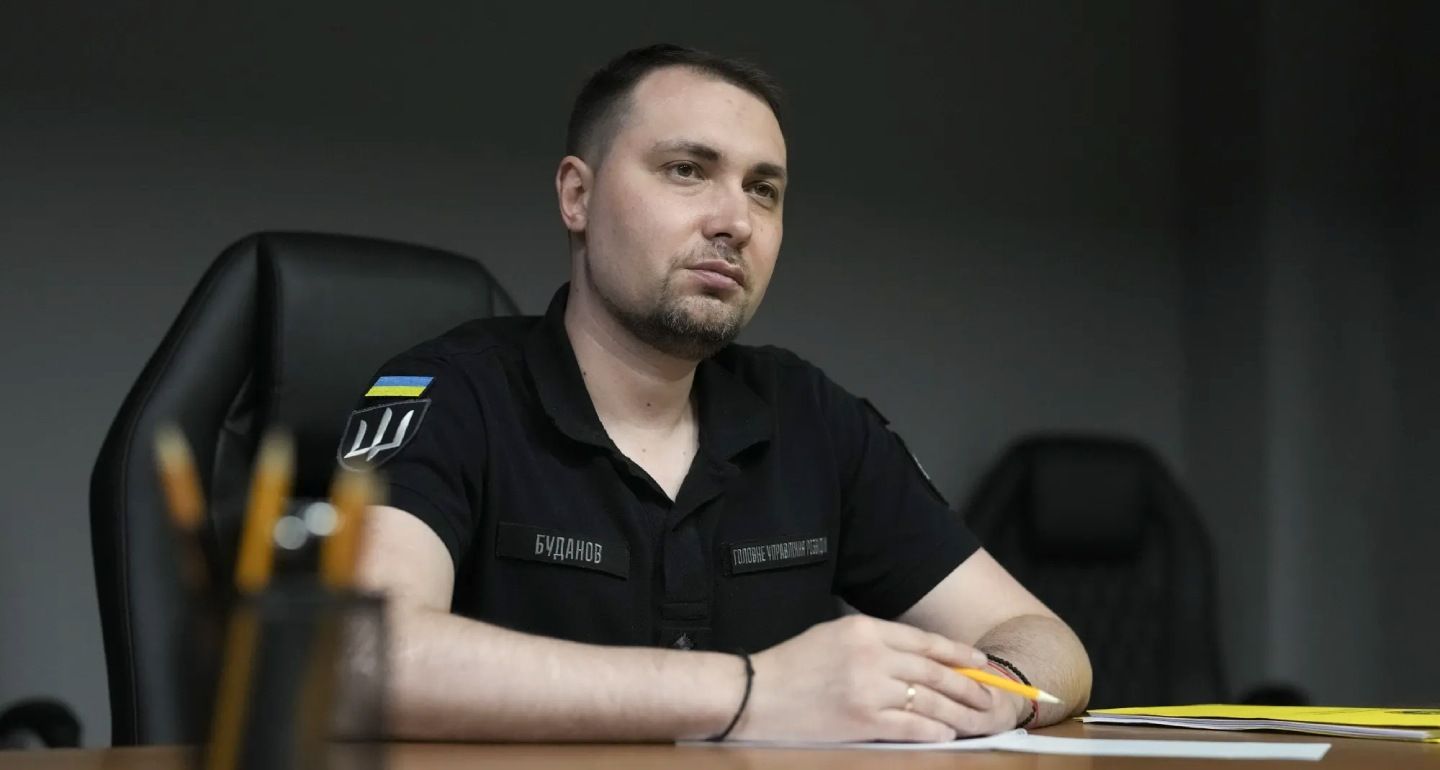
While appointing Kyrylo Budanov will help shore up Zelensky’s political authority and balance the president’s inner circle, the spy chief’s political ambitions mean he could be a threat.
Konstantin Skorkin