

Commentary
From Sudan to Ukraine, UAVs have upended warfighting tactics and become one of the most destructive weapons of conflict.
Jon Bateman, Steve Feldstein
{
  "authors": [
    "Sarah Yerkes",
    "Amr Hamzawy"
  ],
  "type": "commentary",
  "blog": "Emissary",
  "centerAffiliationAll": "",
  "centers": [
    "Carnegie Endowment for International Peace"
  ],
  "englishNewsletterAll": "",
  "nonEnglishNewsletterAll": "",
  "programAffiliation": "",
  "programs": [
    "Middle East"
  ],
  "regions": [
    "Venezuela",
    "Colombia",
    "United States",
    "South America"
  ],
  "topics": [
    "Democracy",
    "Foreign Policy"
  ]
}
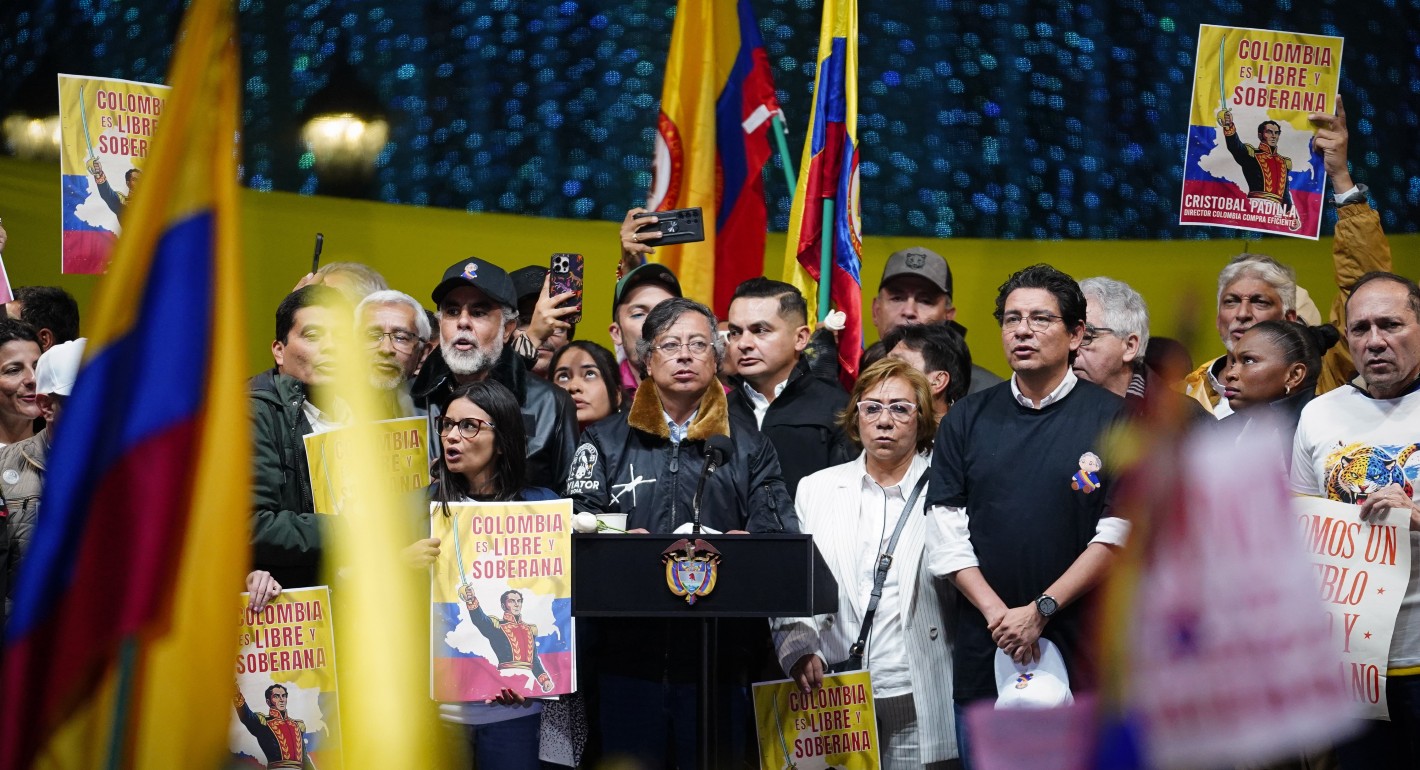
Petro at a rally in Bogotá on January 7, 2026. (Photo by Andres Moreno/Xinhua via Getty Images)
When democracies and autocracies are seen as interchangeable targets, the language of democracy becomes hollow, and the incentives for democratic governance erode.
Since the United States’ seizure of Nicolás Maduro in Venezuela, senior figures in President Donald Trump’s administration have begun openly speculating about “who is next.” Cuba has been mentioned. So, more alarmingly, has Colombia, to say nothing of Greenland. Although Trump seems to have backed off on his threats to invade Bogotá or Nuuk—for now—their casual use suggests a troubling elasticity in how Washington is now thinking about the use of force in the Western Hemisphere—and about the regimes it seeks to bring down.
There is little doubt that the action taken against Venezuela, like similar past interventions, raises serious legal questions under international law. That is true regardless of the Maduro regime’s history. Yet there is a profound political and moral difference between acting against a corrupt autocrat who has systematically dismantled democratic institutions, stolen elections, and ruled through repression and threatening action against the democratically elected leader of Colombia and its functioning, albeit challenged, constitutional system. Acknowledging this difference between Venezuela and Colombia does not amount to endorsing the action against Maduro. It is, rather, an attempt to draw lines that matter, precisely because the erosion of those lines carries dangerous consequences for the Trump administration and the role of the United States in the world.
Last June, we went to Colombia to examine how well the country’s democratic system is delivering governance outcomes for its citizenry. What we encountered does not fit the caricatures implicit in recent U.S. rhetoric. Colombia is not a perfect democracy. It is marked by deep inequality, persistent violence, and stark regional disparities. But it is also unmistakably a real democracy—contested and anchored in strong institutions that continue to matter in the public’s eyes.
Checks and balances are the core of any democratic system, and Colombia’s work well. Executive power is constrained by the courts, oversight bodies, and an independent-minded legislature. Presidential decisions are challenged, policies are delayed or reshaped, and executive authority is routinely questioned. This is the messy, often frustrating reality of democratic governance in the Global South.
Our meetings with members of Congress underscored this point. We spoke with legislators from across the political spectrum, including both supporters and critics of President Gustavo Petro, who was elected with just over 50 percent of the vote in 2022 and is constitutionally prohibited from seeking a second consecutive term in the May election. What was striking was the degree of institutional self-confidence. Right-wing and left-wing members spoke openly about their disagreements with the executive, emphasized their independent mandates, and described concrete efforts to block, amend, or investigate presidential and government initiatives. Congressional opposition in Colombia is neither symbolic nor ornamental. It exercises real power, and the executive must contend with it.
While we were in Bogotá, Petro attempted to push through his controversial labor reform bill via referendum, circumventing the Senate and constitutionally mandated processes for such an action. The response was swift and loud—not only did the high court step in and suspend Petro’s decree, but also the public took to the streets both in support of and against Petro’s actions. Petro, the country’s first leftist leader in a region with a lengthy history of leftist rule, has seen his popularity decline since taking office. As of August 2025, national polls gave him only a 34 percent approval rating, down from 56 percent when he took office.
Colombia’s civic space remains robust and contentious. Human rights organizations, trade unions, social movements, journalists, and advocacy groups operate with a degree of freedom that allows them to scrutinize government behavior and mobilize public pressure. Protest is a recurring feature of political life, and executive officials are expected to respond, if reluctantly. We met with several civil society representatives in Bogotá to debate issues from the economy to the government’s handling of narco-trafficking to social issues. Civil society members not only transparently criticized the government but also openly debated each other—offering a wide range of perspectives on the country’s problems and potential solutions. This constant interaction between executive power and its adversaries in the legislature and in civil society is a defining feature of democratic politics.
None of this is to minimize Colombia’s profound challenges. Regional disparities, particularly between urban centers and more far-flung rural regions, shape citizens’ lived experiences and their relationships to the state and to democracy itself. In some parts of the country, state authority remains weak, armed groups continue to operate, and violence constrains political participation. These realities expose the limits of governance and complicate national reform efforts. They also serve as a reminder that democracy is not a binary condition but a process—uneven, reversible, and always incomplete.
Yet it is precisely in this context that Colombia’s democratic character becomes most evident. Despite insecurity and inequality, political competition remains open, elections meaningful, institutions autonomous, and citizens engaged. Power is diffuse, dissent is welcome, and leadership changes hands from right to left through constitutional means. These features distinguish Colombia fundamentally from authoritarian regimes, such as Maduro in Venezuela.
This distinction shapes the consequences of external action. Threatening or acting against an elected government in a functioning democracy does not merely target an individual leader. It undermines institutions, weakens internal accountability, and sends a message that democratic outcomes are conditional on external approval. In a region with a long history of external intervention—primarily from the United States—such signals resonate far beyond any single case.
There may be no meaningful legal difference, under a maximalist interpretation of executive powers in the United States, between action taken against Venezuela and threats directed at Colombia. But there is a moral and political difference, and ignoring it risks collapsing the very standards that the United States once upheld. When democracies and autocracies are treated as interchangeable targets, the language of democracy becomes hollow, and the incentives for democratic governance erode.
Colombia’s democracy is fragile. Threatening it only tells other countries that the United States treats other democracies, however imperfect, as expendable. Colombia should instead be engaged, supported, and criticized through political, economic, financial, and diplomatic means—not threatened as the next stop on a list of potential interventions.
Carnegie does not take institutional positions on public policy issues; the views represented herein are those of the author(s) and do not necessarily reflect the views of Carnegie, its staff, or its trustees.
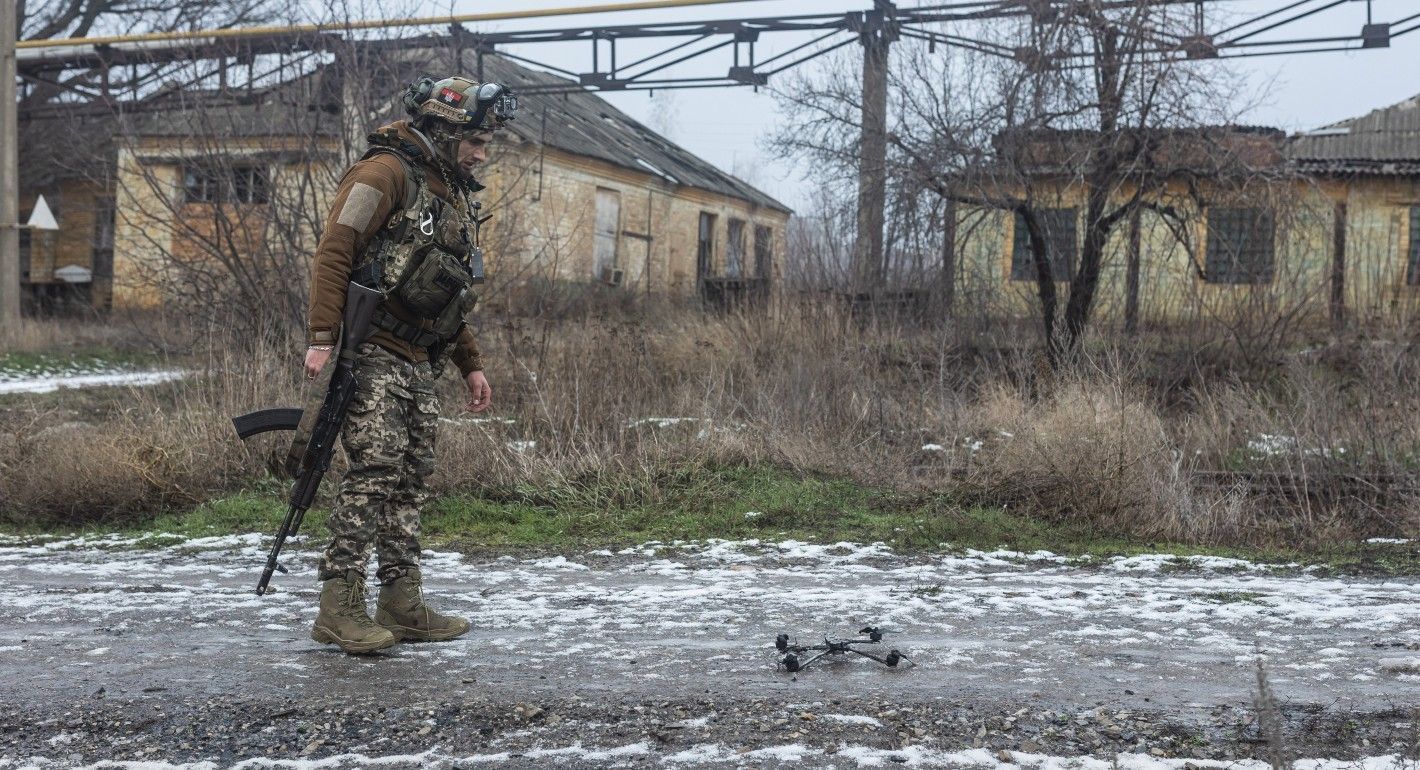
From Sudan to Ukraine, UAVs have upended warfighting tactics and become one of the most destructive weapons of conflict.


Jon Bateman, Steve Feldstein
And how they can respond.
Sophia Besch, Steve Feldstein, Stewart Patrick, …
They cannot return to the comforts of asymmetric reliance, dressed up as partnership.
Sophia Besch
Carnegie scholars examine the crucial elements of a document that’s radically different than its predecessors.



James M. Acton, Saskia Brechenmacher, Cecily Brewer, …
A new study found that a combination of policy and diplomatic focus contributed to a dramatic shift in fentanyl-related overdose deaths.

Jeffrey Prescott