

Other
- +18
James M. Acton, Saskia Brechenmacher, Cecily Brewer, …
{
  "authors": [
    "Barbara Weisel"
  ],
  "type": "commentary",
  "blog": "Emissary",
  "centerAffiliationAll": "dc",
  "centers": [
    "Carnegie Endowment for International Peace"
  ],
  "collections": [
    "Economic Risk in Asia",
    "The Middle Power Moment?"
  ],
  "englishNewsletterAll": "asia",
  "nonEnglishNewsletterAll": "",
  "primaryCenter": "Carnegie Endowment for International Peace",
  "programAffiliation": "AP",
  "programs": [
    "Asia"
  ],
  "regions": [
    "United States"
  ],
  "topics": [
    "Trade",
    "Economy",
    "Foreign Policy",
    "Domestic Politics",
    "EU"
  ]
}
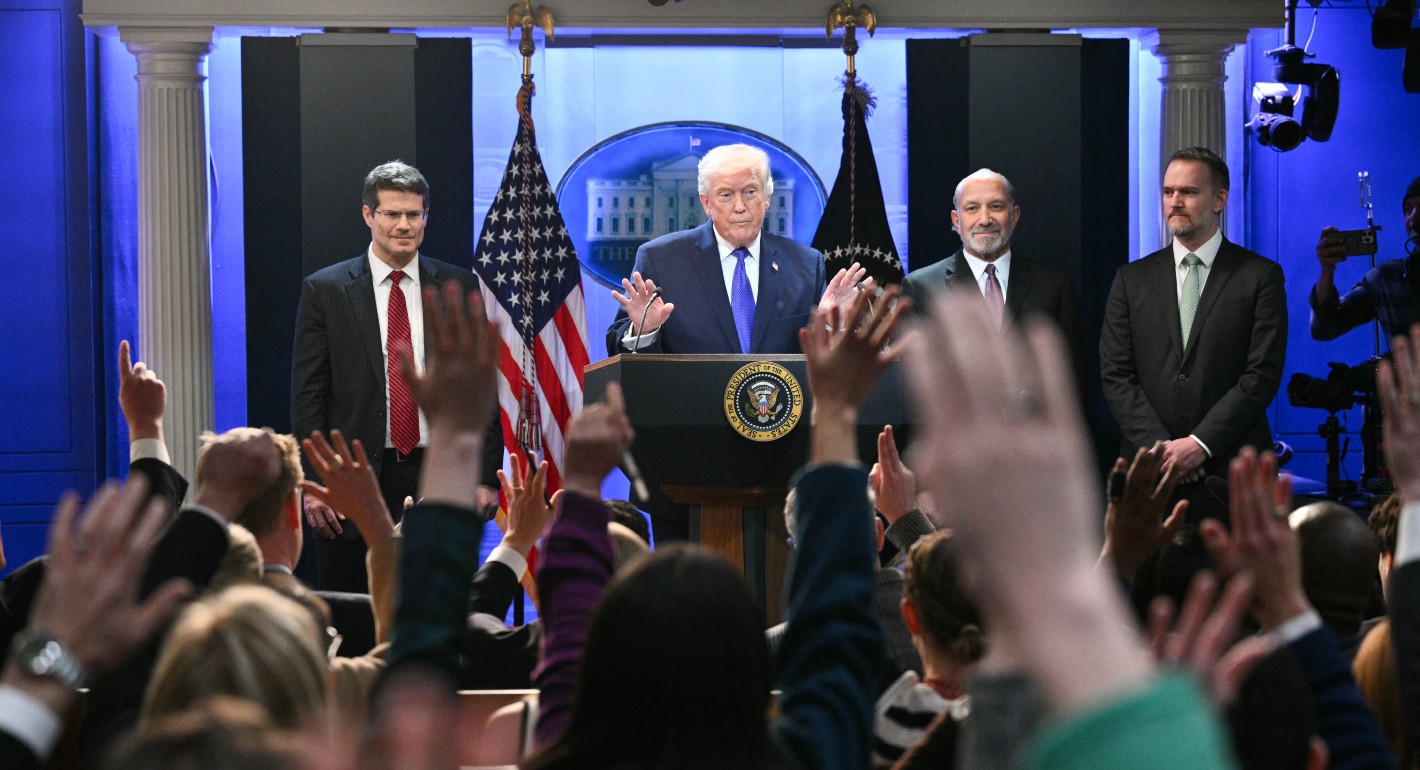
Trump gestures during a White House press conference on February 20, 2026. (Photo by Mandel Ngan/AFP via Getty Images)
Despite considerable challenges, the CPTPP countries and the EU recognize the need for collective action.
In the wake of the February 20 Supreme Court tariff ruling, President Donald Trump has made clear he intends to continue wielding his favorite economic tool. Indeed, at a press conference shortly after the decision, Trump announced that his administration would impose a 10 percent global tariff, then declared the next day he would raise that figure to 15 percent, before ultimately letting the 10 percent rate stand—at least for now. Instead of imposing tariffs via the International Emergency Economic Powers Act, which the Supreme Court declared unlawful, Trump said he will temporarily employ a never-used authority for these tariffs, and then use Section 301, which the administration has previously used to impose tariffs on China.
The uncertainties—including the status of the bilateral trade deals the United States has already concluded—now seem to outnumber the certainties, save for the fact that the administration remains intent on using tariffs as a negotiating tool and to raise revenue. So although the president now faces some limits on his ability to impose tariffs, the decision does not alter the urgency many countries see in acting collectively to advance their economic interests. And they have ideas.
To date, countries have focused on responding to the immediate threat the Trump administration’s tariffs pose to them, leaving limited bandwidth for consideration of future trade architectures. Then, in a speech at Davos in January, Canadian Prime Minister Carney exhorted middle powers to act together, lest they be on the menu. Carney noted Canada’s efforts to “build a bridge” between the Trans-Pacific Partnership (TPP), a proposed trade agreement among twelve Pacific Rim countries that the United States exited under Trump in 2017, and the EU. Neither bloc appears to be looking at negotiating an entirely new agreement, which they likely recognize would be an extremely prolonged (and potentially unachievable) process. Instead, they are contemplating negotiation of rules that would align some key elements of EU agreements and the Comprehensive and Progressive Trans-Pacific Partnership (CPTPP) to advance their common interests.
Carney’s approach makes sense. The CPTPP—which succeeded the TPP and currently includes twelve countries—was designed to gradually expand to include like-minded countries prepared to adopt the agreement’s largely U.S.-proposed rules. Meanwhile, the EU has been negotiating bilateral agreements with countries across the Indo-Pacific for more than a decade, with U.S. actions providing impetus for the unexpected progress achieved in the last year. In addition, in the wake of the COVID-19 pandemic, both the EU and CPTPP countries have sought to build more resilient supply chains, so linking up is logical. Doing so would also deepen relationships among countries that remain committed to preserving the rules-based open trade on which their economies depend and serve as a rebuttal to claims that the era of free trade is over.
For most countries, the urgency of deepening supply chain networks with reliable partners has increased exponentially, as they aim to reduce their vulnerability to coercion from the United States or others. Even as they recognize the substantial leverage that Washington has over them, they see the prospect that they will be held hostage indefinitely to shifting U.S. demands as untenable and politically indefensible. Having diversified their supply chains to mitigate their China risk in the past decade, they hope to similarly reduce their exposure to the United States.
Still, these countries are not seeking to form a bloc against the United States—although it would be quite ironic to do so through the TPP, which Washington spearheaded. Instead, they want to develop affirmative approaches for promoting trade and investment with like-minded partners. They value their overall relationships with the United States and are interested in working cooperatively on select initiatives, such as critical minerals, but they see their efforts to enhance their room to maneuver as paramount.
Successfully linking the CPTPP and the EU agreements, however, will not be easy. Although simpler than negotiating an entirely new trade agreement among nearly forty countries, reaching deals on how to align the agreements in even a few areas will be challenging.
Some reports say the CPTPP countries and the EU are considering strengthening their supply chains through an agreement on rules of origin—detailed rules that determine the “economic nationality” of a product and whether it qualifies for duty-free treatment or other benefits. These rules can be designed to promote trade among members of an agreement. But without bilateral EU agreements with all CPTPP members, some countries could either be excluded or receive trade preferences essentially for free. The EU currently has bilateral free trade agreements with most CPTPP members, but it is still negotiating with Australia and Malaysia, and no talks are currently planned with Brunei.
The EU and CPTPP countries also may pursue initiatives aimed at agreeing to common rules in areas such as customs and trade facilitation, digital trade, or investment protections. These steps would deepen trade ties and foster the trust needed to achieve more ambitious goals. However, on their own, these initiatives would be insufficient to significantly reshape supply chains in Europe or the Indo-Pacific or insulate either region from the vicissitudes of U.S. or Chinese trade policy.
With an eye to the future, the EU and CPTPP countries could pursue negotiations on rules in emerging areas such as green technology trade or AI. Singapore, Australia, Chile, and New Zealand have already launched initiatives to set standards and encourage cooperation to boost trade and investment to promote sustainability. However, reaching agreement on these issues may be difficult, and the U.S. may seek to block any initiative that it views as negatively impacting its interests.
Despite these not inconsiderable challenges, the EU and CPTPP countries recognize the imperative of collective action. They understand, as Carney asserted, that the old order will not be restored and work needs to begin immediately on creating a new one, which they are committed to help shape. The EU and CPTPP countries doubt Washington’s threats can persist beyond the Trump administration, nor that its approach will ultimately succeed. But they are already beginning a process to share ideas and proposals for where to go from here. If and when tariffs are no longer Washington’s preferred economic cudgel, these ongoing discussions may well help lay the groundwork for a new and robust international trade order.
Understand the world with the latest from our scholars around the world.

Nonresident Scholar, Asia Program
Barbara Weisel is a nonresident scholar in the Asia Program at the Carnegie Endowment for International Peace and the former U.S. chief negotiator of the Trans-Pacific Partnership.
Recent Work



James M. Acton, Saskia Brechenmacher, Cecily Brewer, …
Barbara Weisel
Carnegie does not take institutional positions on public policy issues; the views represented herein are those of the author(s) and do not necessarily reflect the views of Carnegie, its staff, or its trustees.
Its reinstatement should be celebrated, but it retains some major shortcomings.

Leonardo Martinez-Diaz
Four Middle East experts analyze the region’s reactions and next steps.



Amr Hamzawy, Andrew Leber, Eric Lob, …
Why the Iran ceasefire isn’t a quick fix to the Strait of Hormuz energy crisis.


Helima Croft, Aaron David Miller
The Greenland crisis taught Europe to push back against Washington. In Iran, it must learn how to engage without falling in line.

Sophia Besch
Lessons from other backsliding democracies show that mass mobilization needs to feed into an electoral strategy.
Saskia Brechenmacher, Shreya Joshi