

In The Media
David Rothkopf
{
  "authors": [
    "David Rothkopf"
  ],
  "type": "legacyinthemedia",
  "centerAffiliationAll": "",
  "centers": [
    "Carnegie Endowment for International Peace"
  ],
  "collections": [],
  "englishNewsletterAll": "",
  "nonEnglishNewsletterAll": "",
  "primaryCenter": "Carnegie Endowment for International Peace",
  "programAffiliation": "",
  "programs": [],
  "projects": [],
  "regions": [
    "South Asia",
    "India",
    "East Asia",
    "China",
    "Caucasus",
    "Russia",
    "North America",
    "South America"
  ],
  "topics": [
    "Economy",
    "Trade",
    "Foreign Policy"
  ]
}
Source: Getty
As emerging-market powers have grown economically, their geopolitical rise is occurring equally quickly. The G20 summit highlights a new ‘new world order,’ in which emerging powers have a stronger voice in international institutions. Despite their sometimes differing agendas, countries like China, India, Russia, and Brazil are learning to work together to earn a voice in this new economic order.
Source: Newsweek

When Goldman Sachs's Jim O'Neill coined the term "BRICs" in 2001 to refer to the biggest of the emerging powers—Brazil, Russia, India and China—he estimated that these four nations would displace Europe from the list of the world's six largest economies by 2050. He could not, however, have imagined that they would so quickly translate economic promise into geopolitical clout. Neither could he have envisioned how a combination of the diplomatic missteps of the Bush administration, a once-in-a-century financial crisis and the arrival of the Obama era might quickly institutionalize that rise in what may amount to nothing less than the most sweeping transformation of the international system since the United Nations, the IMF and the World Bank were created in the 1940s.
Just six months ago, the foreign ministers of the BRICs met in Yekaterinburg, Russia, to take an important step toward transforming a catchy acronym into an international force to be reckoned with. They defined a set of common goals built around the idea of a "more democratic international system." Given the antidemocratic impulses of the Putin administration and the reluctance of the Chinese to embrace anything but limited experiments in democracy, the language might have seemed discordant. But in a world deeply unsettled by the possibility of an unchecked single superpower that had abandoned many of the principals of international law it once championed, such an idea and such a group—representing almost half the world's population—had power and resonance. The Yekaterinburg communiqué asserted the four countries' "strong preference for multilateral diplomacy in dealing with the common challenges to international security." It specified areas in which the BRICs had common objectives, from combating terrorism to energy security, from socioeconomic development to climate change. Specifically, the group underscored the importance of South-South cooperation, with the clear implication that it would be to this new developing world alliance what the G8 was to the North.
The group met again on the fringes of the U.N. General Assembly meeting in September, convened a finance and economy ministerial in São Paulo in the run up to the G20 meeting and has also scheduled a leaders summit of its own in India next year. Much of the increased momentum is a result of the recent global financial meltdown. There were no solutions to the problem that did not involve the BRICs. By some estimates, more than three quarters of next year's global growth will come in the emerging world. China is home to the world's largest capital reserves (China's $586 billion stimulus program, announced last week, dwarfs similar efforts contemplated by the United States). The result is that the once dominant rich man's club of the G8 nations is being supplanted by the more representative group of the G20.
At an event at the Aspen Institute in Washington last week, a questioner asked if turning to the G20 in economic discussions also implied a shift toward a broader group of nations on the U.N. Security Council and in other international institutions. Former U.S. national-security adviser Brent Scowcroft, the man who coined the phrase "new world order" in the wake of the fall of the U.S.S.R., said "yes," and specifically cited the BRICs as the linchpin of this new formulation.
In the context of the Bretton Woods II discussions, the agenda of the BRICs is clear. They seek a bigger role in new or restructured institutions, one in which the post-World War II powers no longer dominate voting structures. They also want stronger global regulatory mechanisms, a position the Bush team resisted, but one the Obama administration may well consider.
Each of the individual players also sees membership in the collective effort as a way to advance their national goals. Brazil and India, already collaborating effectively in blunting EU and U.S. pressure in the Doha trade negotiations, want a place at the table in the U.N. Security Council. Russia wants in to the WTO. China seeks to define its role as a great power and to legitimize itself through this alliance with democracies like India and Brazil. All want to have a say in creating new institutions on climate change, revamping the Non-Proliferation Treaty, upgrading the WTO and revitalizing the United Nations.
The need for broad global engagement around not only the financial crisis but many other world challenges will almost certainly lead the Obama administration to more actively engage the BRICs. One challenge for the emerging powers and for the Obama team will be reconciling the differences of various members of this evolving alliance. China is not eager to have India on the U.N. Security Council. Russia has no sense of urgency for others to join the G8. India has clashing security concerns with China in Asia. But for all these differences, circumstances have brought this group together in ways that ensure it must be reckoned with.
A senior diplomat from one of the BRICs recently commented on their differences and their alignments by paraphrasing the "Thousand and One Nights," characterizing the new players as "bedfellows sometimes dreaming different dreams but sleeping in the same tent." Given their rising status, the Obama administration, the leaders of the EU and others who will play a role in devising the economic and political order of the 21st century must recognize that we have entered an era in which the dreams of new powers, shared and otherwise, will play a central role in defining our collective future.
This article originally appeared in Newsweek.
Former Visiting Scholar
David Rothkopf was a visiting scholar at the Carnegie Endowment as well as the former CEO and editor in chief of the FP Group.
Recent Work
David Rothkopf
David Rothkopf
Carnegie does not take institutional positions on public policy issues; the views represented herein are those of the author(s) and do not necessarily reflect the views of Carnegie, its staff, or its trustees.
Montenegro and Albania are frontrunners for EU enlargement in the Western Balkans, but they can’t just sit back and wait. To meet their 2030 accession ambitions, they must make a strong positive case.


Dimitar Bechev, Iliriana Gjoni
Governments now deploy online platforms to shape public opinion and influence collective cognition. This is acutely apparent between China and Taiwan.
Frank Cheng-Shan Liu

This piece argues that the present Indian strategy, based on opportunistic diversification and utilization of limited strategic reserves, remains inadequate when confronting supply disruptions. It evaluates India’s options in the short, medium, and long terms.

Vrinda Sahai
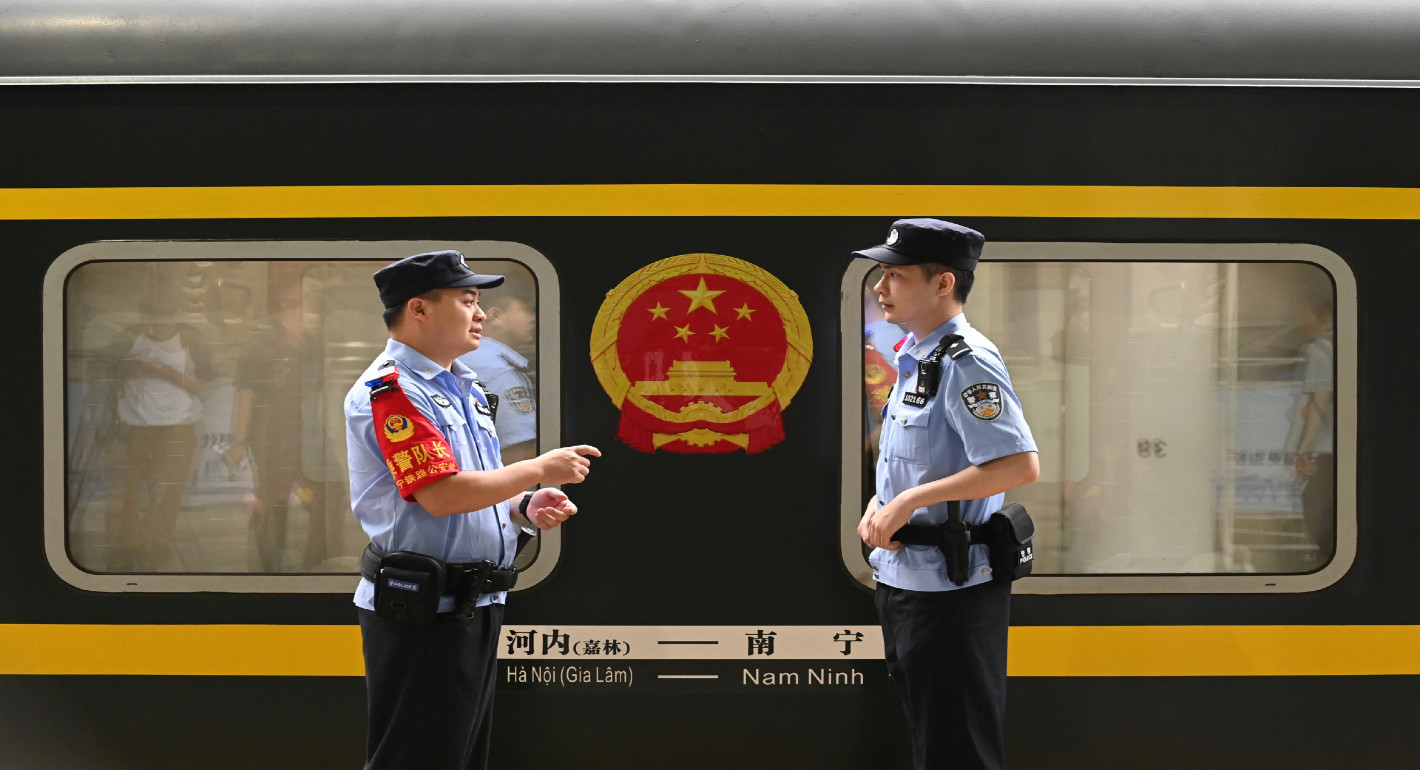
Despite long-standing differences, China and Vietnam are reinforcing common ground for collaboration, especially in public security. This internal security–centered diplomacy offers a strengthened road map for how China moves forward with Southeast Asia.
Sophie Zhuang
Climate mobility interventions can vary, but they all present opportunities to unlock transformative results that mitigate costs associated with inaction.

Alejandro Martin Rodriguez