

Commentary
Michael Young
{
  "authors": [
    "Michael Young"
  ],
  "type": "commentary",
  "blog": "Diwan",
  "centerAffiliationAll": "",
  "centers": [
    "Carnegie Endowment for International Peace",
    "Malcolm H. Kerr Carnegie Middle East Center"
  ],
  "englishNewsletterAll": "",
  "nonEnglishNewsletterAll": "",
  "primaryCenter": "Malcolm H. Kerr Carnegie Middle East Center",
  "programAffiliation": "",
  "regions": [
    "Iran",
    "United States",
    "Israel",
    "Gulf"
  ]
}
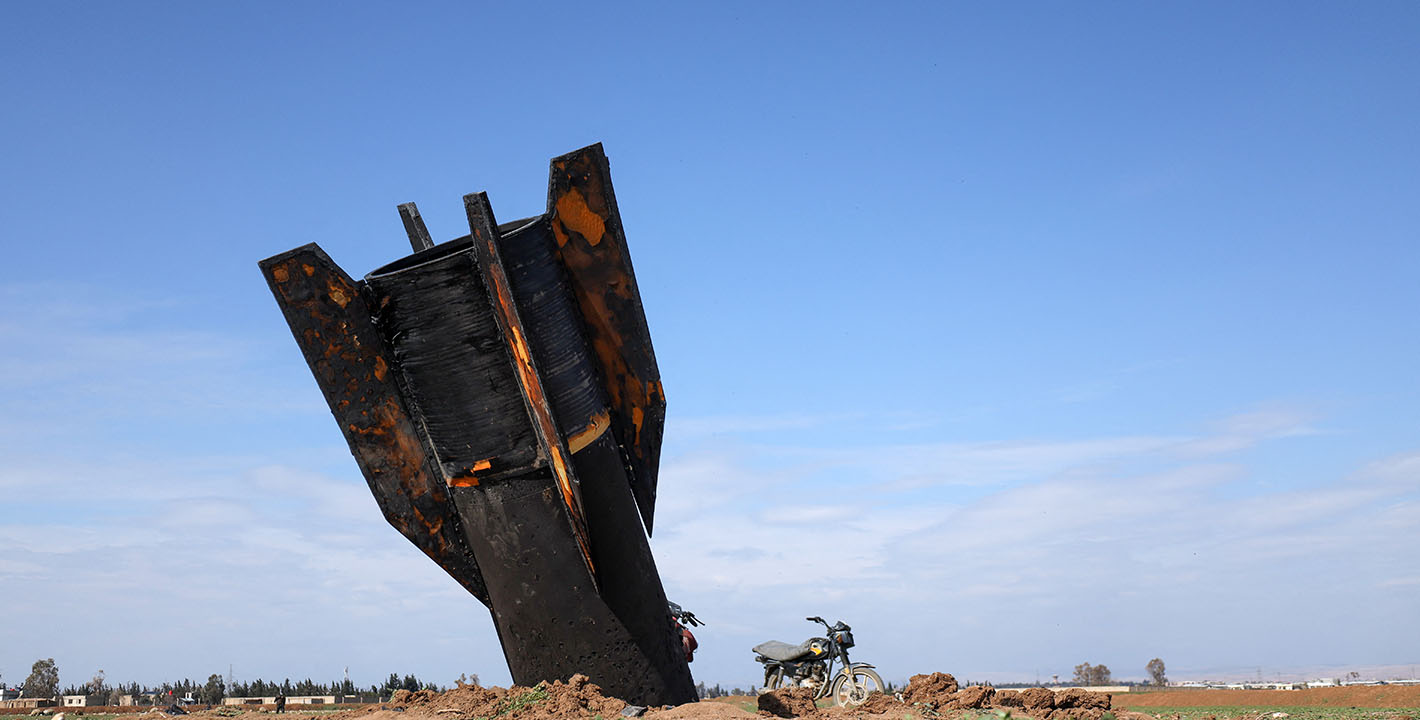
Source: Getty
In an interview, Nicole Grajewski discusses the military dimension of the U.S. and Israeli attacks on Iran.
Nicole Grajewski is a nonresident scholar in the Nuclear Policy Program at the Carnegie Endowment for International Peace, and a tenure-track assistant professor at the Centre de recherches internationales (CERI), Sciences Po, in Paris. She is also an associate with the Project on Managing the Atom at Harvard’s Belfer Center for Science and International Affairs. She hosts the Axes and Atoms Substack. A specialist on Russia and Iran, she is the author of Russia and Iran: Partners in Defiance from Syria to Ukraine (Oxford University Press/Hurst), which will appear this month. Diwan interviewed her in early March to discuss the military dimension of the ongoing U.S. and Israeli attack against Iran, and the implications of this.
Michael Young: You’ve recently published an article on your Substack examining the targets and objectives three days into the attack by the United States and Israel against Iran. What were the main takeaways of your article, and have they changed since the publication date?
Nicole Grajewski: The main takeaways from the piece were that the primary targets were conventional military and leadership targets, likely with the objective of degrading the regime. Since that post went up, however, we have seen the campaign expand to other targets, with conflicting reports of more ambitious plans that seem to be more ad hoc than strategic.
The campaign opened with strikes against the Iranian leadership. The opening salvo emphasized decapitation and command disruption, with strikes against senior Iranian leadership and regime command sites using systems such as Israeli air‑launched ballistic missiles and U.S. cruise missiles. This reflected an initial concept of operations aimed at shocking the regime, degrading central control, and shaping Iran’s response options rather than immediately going after every element of its military power. The early targeting also extended beyond the political leadership to the regime’s coercive and information apparatus. The Basij headquarters was hit, the Malek-Ashtar complex of the Islamic Revolutionary Guard Corps (IRGC) in Tehran was destroyed, and Israel struck the headquarters of the Islamic Republic of Iran Broadcasting. That set of targets suggested the campaign was not only about degrading military capacity, but also about undermining the regime’s ability to control information and mobilize repression internally.
The campaign then shifted toward systematically dismantling Iran’s missile forces and air defense network. Militarily, this has likely been the most consequential part of the campaign so far. Israeli officials claim they have achieved near-complete air superiority after destroying a large portion of Iran’s air defense systems and conducting thousands of strikes. Once air defenses are degraded, long-endurance intelligence, surveillance, and reconnaissance (ISR) assets can operate far more freely over Iranian territory, tracking mobile missile launchers and cueing strikes before they can fire.
Iran’s missile infrastructure has been heavily targeted as part of that effort. Several major missile bases—including facilities near Tabriz and the Imam Ali base near Khorramabad—were struck with bunker-penetrating munitions. Other sites appear to have been targeted more selectively, with strikes against missile checkout buildings or launcher positions rather than entire facilities. Israel claims hundreds of targets tied to missile forces and drone infrastructure have been struck.
Iran has still managed to launch significant retaliatory salvos. Iranian sources have claimed hundreds of ballistic-missile and naval-missile launches, alongside large numbers of drone strikes, since the start of the war. But the volume of launches has declined noticeably over the past several days. The decline could be attributed partly to the degradation of launch capabilities and partly to Iran attempting to conserve remaining missiles for a longer conflict.
Another element of the campaign has been the systematic targeting of Iran’s defense industrial base. Facilities associated with missile production have been struck, including the Shahid Hemmat complex at Khojir and associated propellant production sites. Israel also targeted the HESA aircraft manufacturing complex near Isfahan. These strikes are aimed less at immediate battlefield effects and more at Iran’s ability to replenish missile inventories over time.
The nuclear dimension of the campaign has so far been somewhat more limited in comparison to the major strikes carried out during the June 2025 twelve-day war. Last year’s campaign already inflicted substantial damage on Iran’s key enrichment facilities, including Fordow, Natanz, and Isfahan. The 2026 strikes appear designed largely to reinforce that earlier damage rather than replicate it.
Recent satellite imagery suggests additional damage at Natanz, particularly around facility entrances and above-ground infrastructure. Beyond Natanz, Israel struck a covert site northeast of Tehran called Minzadehei—an underground facility where Israel assessed that Iran had relocated nuclear weapons-related infrastructure following last June’s campaign. The IRGC’s Malek-Ashtar complex, which houses nuclear weapons development activities, was also destroyed. There also were strikes against the Lavisan 2-Mojdeh complex, which houses facilities belonging to the administrative leadership of Iran’s nuclear weapons program that Tehran had recently begun rebuilding after last year’s campaign.
There have been reports of a potential special operations effort to retrieve Iran’s highly enriched uranium stockpile at Isfahan. If confirmed, that would mark a significant new stage in the war and an escalation in ambition—moving from degrading Iran’s nuclear infrastructure to physically securing its fissile material. It would also represent a different category of operation than anything attempted so far.
The biggest development since my initial analysis is the expansion of the campaign into energy infrastructure. On March 7, strikes hit oil storage facilities in Tehran and also targeted parts of Iran’s gas infrastructure, including installations tied to the South Pars field and processing facilities linked to Bushehr. Until that point the United States and Israel had largely avoided Iranian oil infrastructure, likely out of concern that it would destabilize global energy markets. That restraint now appears to be eroding.
In short, the campaign appears to have moved through several overlapping stages: leadership decapitation, systematic military degradation, attacks on the defense industrial base, and now economic pressure targeting energy infrastructure. Whether that pressure produces a political outcome is still unclear. The United States has demanded Iran’s unconditional surrender, while Iranian officials have rejected ceasefire proposals and warned they are preparing for a prolonged conflict. At the moment the positions on both sides remain far apart, which suggests the most dangerous phase of the war may still lie ahead.
MY: In the runup to the conflict, you wrote a piece for Diwan arguing that U.S. aims in Iran extended beyond nuclear issues, and that the costs and risks of what followed deserved far more public scrutiny than they were receiving. First, why did you say that? And second, we’ve now seen what followed, with the U.S. and Israeli decision to attack Iran. Do you think, almost two weeks into the war, that both countries still consider the costs and risks worth it?
NG: I wrote that piece because I felt the broader nuclear policy community, particularly analysts who do not closely follow Iran, were framing the situation far too narrowly.
There is a recurring tendency in the nuclear policy world for experts to jump into a debate whenever nuclear issues appear in the headlines and immediately center the conversation on technical parameters: enrichment levels, centrifuge cascades, breakout timelines, and the mechanics of a potential agreement. That instinct can be useful in some contexts, but in this case it was distorting the analysis.
The signals coming from the region simply did not support the idea that this was primarily about reviving nuclear diplomacy. Yet much of the commentary continued to treat the situation as if we were operating within the familiar framework of the debate over a nuclear agreement with Iran, whether negotiations might resume, whether Iran might agree to new limits, or whether technical compromises were possible.
Once you step outside that narrow nuclear lens, it becomes much easier to see the broader strategic dynamics that were driving events. In Iran’s case, several developments were converging that had little to do with the nuclear file itself. By early this year, Israeli concerns about Iran’s ballistic missile program were intensifying, domestic unrest inside Iran had escalated following the violent crackdown during the January protests, and military deployments across the region were shifting in ways that looked far more consistent with preparation for conflict than with diplomacy. Taken together, those factors suggested a deteriorating environment in which the nuclear issue was only one element of a much larger confrontation.
Beginning in January, we saw a steady and highly visible U.S. military buildup in the region: additional carrier strike groups moving into theater, long-range strike aircraft deployments, expanded air and missile defense coverage, and a broader logistical architecture to support sustained combat operations. Meanwhile, Washington was increasingly speaking publicly about the possibility of a nuclear agreement with Iran, even though the chasm between the U.S. and Iranian positions did not seem to close. Yet, the scale of the deployments, the mix of capabilities involved, and the tempo at which they were arriving suggested planning for a major contingency rather than the kind of calibrated signaling typically used to support negotiations. In short, the buildup did not look like leverage for talks; it looked like preparation for a major strike campaign.
However serious the outstanding nuclear issues with Iran may be, they are not problems that are typically addressed by deploying multiple carrier strike groups, building out regional strike capacity, and positioning assets designed for sustained offensive operations. When that level of military capability is being assembled, the objectives usually extend well beyond the nuclear file.
A little over week into the war, the targeting patterns have largely reinforced that concern. Based on the available data, very few nuclear facilities have been directly struck so far. Instead, the overwhelming focus of the campaign has been on Iran’s military capabilities, particularly the ballistic missile program, as well as on leadership targets and key institutions tied to regime control.
MY: How has the killing of Ayatollah Ali Khamenei shaped the outcome of the conflict, or indeed has it?
NG: It has introduced a degree of uncertainty and jockeying within Iran’s political system, but it has not produced the kind of immediate collapse that some outside observers predicted. The Assembly of Experts reportedly moved to select a new supreme leader, Mujtaba Khamenei, in a virtual session on March 8, which suggests that the regime’s institutional mechanisms for succession were activated very quickly. At the same time, the figures who appear to be exercising the most visible influence right now are not necessarily the formal executive leadership. Instead, much of the decisionmaking seems to be concentrated among senior power brokers such as Ali Larijani, Mohammed Bagher Qalibaf, and the security establishment figures in the IRGC and Khatam al-Anbiya. By comparison, President Masoud Pezeshkian appears to be playing a much more limited role in shaping wartime decisionmaking.
More broadly, Khamenei’s death does not mean that the Iranian state suddenly became hollow or leaderless. If anything, the Islamic Republic was built in a way that diffuses power across multiple institutions. Khamenei was unquestionably the central node in that system, but the regime also spent decades building parallel institutions. The real question is whether those elite dynamics remain manageable as the conflict continues, or whether the pressures of the war begin to deepen divisions within the political and security elite.
MY: What is your reaction when hearing the official statements of governments on the contending sides of the conflict describing military progress in the war? How does the official version on each side square with what you are seeing and analyzing?
NG: Every side in a war has an incentive to exaggerate its success and minimize its setbacks, and this conflict is no different. On the most exaggerated end, Iranian official messaging has a long history of overstating both capabilities and battlefield effects. But I have also been frustrated with some of the commentary assessing Iranian military performance, which often judges Iran against standards its military doctrine was never designed to meet.
Iran’s military strategy was never built to perform like the United States or Israel in high-tempo precision warfare. It is structured around endurance, retaliation, and the ability to impose costs over time through missiles, drones, and regional escalation. That does not make it particularly impressive from a Western operational standpoint, but it does mean performance should be judged against the strategy Iran actually built—not the one analysts wish it had.
Even under intense pressure, Iran has continued to launch. Between February 28 and March 4, Iran conducted more than 90 attempted strikes against Israel alone—a five-day total representing more than 60 percent of all strikes recorded during the June 2025 war. Iran’s strikes in the Gulf have been among the more operationally coherent elements of its retaliation, though that is a modest bar and largely consistent with what Iran was expected to be capable of doing. Targeting military and civilian infrastructure across Bahrain, Kuwait, Qatar, Saudi Arabia, and the United Arab Emirates, Iranian strikes have forced embassy closures, disrupted operations at U.S. bases, and compelled regional governments to activate air defenses at a scale and tempo that strains interceptor inventories.
That said, Iran’s overall military performance in this conflict has not been remarkable, and it does not represent anything close to a serious threat to the United States or Israel in any conventional sense. Iran’s failure to disperse many of its launchers in advance of the conflict meant that surveillance assets could monitor known missile bases and track launch activity in real time. Iran also appears to have a limited capability to rapidly reload launchers in the field or recover damaged systems, which allows drones or strike aircraft to destroy launchers returning to known sites or abandoned after mechanical failures.
We also have to be cautious about drawing firm conclusions from the battlefield data that is publicly available. We have not yet been able to obtain comprehensive satellite imagery from many of the sites attacked in the Gulf or in Israel, which makes it difficult to assess the full extent of the damage on either side. A lot of what is circulating right now comes from partial imagery, official claims, or isolated videos, so there is still a great deal that remains unknown.
What does seem clear is that the United States and Israel have been successful in degrading elements of Iran’s military capabilities, particularly its missile infrastructure and air defenses. But that outcome is not entirely surprising. Both countries learned a great deal from the June war last year, and they entered this campaign with overwhelming advantages in intelligence, surveillance, airpower, and precision strike capabilities. When you combine persistent ISR with the ability to strike quickly across long distances, it gives them a significant operational edge.
The United States and Israel currently enjoy a very strong position in the air domain, but that does not necessarily translate into seamless operations on the ground. If the conflict were to shift toward a ground campaign, the operational challenges would look very different. My concern is that political leaders in the United States or Israel might interpret the dominance seen in the current phase of the war as evidence that subsequent phases would be equally straightforward, when in reality the dynamics of ground warfare in Iran would be far more complex and unpredictable.
MY: President Donald Trump has said that the only outcome for Iran is “unconditional surrender.” Is this a realistic objective, and does the United States have the capacity to impose it; or on the contrary, as some have pointed out, are the Iranians in a better situation to prevail because all they need to do is survive the U.S. and Israeli onslaught?
NG: Iran’s entire military strategy was formed on the basis of lessons learned during the Iran-Iraq War. That war left a deep imprint on how the Iranian leadership thinks about war, endurance, and political survival. The lesson the regime took from that experience was not that it needs to defeat stronger adversaries in a conventional sense, but that it needs to survive long enough to impose political costs on them. Endurance, sustained retaliation, and the ability to absorb punishment are central to that doctrine. From that perspective, Iran does not need to “win” in the way the United States or Israel might define victory. It needs to survive the campaign, maintain enough capability to continue retaliating, and avoid a collapse of the political system. That is a much lower threshold than unconditional surrender.
At the same time, it is still very early to draw firm conclusions about how this will unfold. One of the biggest unknowns is what happens inside Iran’s political and security elite as the war continues. Another major uncertainty is how far the United States and Israel are actually willing to go in pursuit of their objectives. Military pressure from the air is one thing; imposing something such as unconditional surrender would require a level of escalation that likely extends far beyond the current campaign. Whether that means a prolonged air war, a ground component, or efforts to trigger regime collapse are questions that remain unresolved. So, while the military balance heavily favors the United States and Israel, the political dynamics of war are much harder to control.

Editor, Diwan, Senior Editor, Malcolm H. Kerr Carnegie Middle East Center
Michael Young is the editor of Diwan and a senior editor at the Malcolm H. Kerr Carnegie Middle East Center.
Recent Work
Michael Young
Michael Young
Carnegie does not take institutional positions on public policy issues; the views represented herein are those of the author(s) and do not necessarily reflect the views of Carnegie, its staff, or its trustees.

In an interview, Naysan Rafati assesses the first week that followed the U.S. and Israeli attack on Iran.
Michael Young
At heart, to impose unconditional surrender on Hezbollah and uproot the party among its coreligionists.

Yezid Sayigh
As Iran defends its interests in the region and its regime’s survival, it may push Hezbollah into the abyss.
Michael Young
Because of this, the costs and risks of an attack merit far more public scrutiny than they are receiving.

Nicole Grajewski
The organization is under U.S. sanctions, caught between a need to change and a refusal to do so.
Mohamad Fawaz