

Commentary
Michael Young
{
  "authors": [
    "Michael Young"
  ],
  "type": "commentary",
  "blog": "Diwan",
  "centerAffiliationAll": "",
  "centers": [
    "Carnegie Endowment for International Peace",
    "Malcolm H. Kerr Carnegie Middle East Center"
  ],
  "englishNewsletterAll": "",
  "nonEnglishNewsletterAll": "",
  "primaryCenter": "Malcolm H. Kerr Carnegie Middle East Center",
  "programAffiliation": "",
  "regions": [
    "Levant",
    "Syria",
    "Lebanon",
    "Israel",
    "United States"
  ]
}
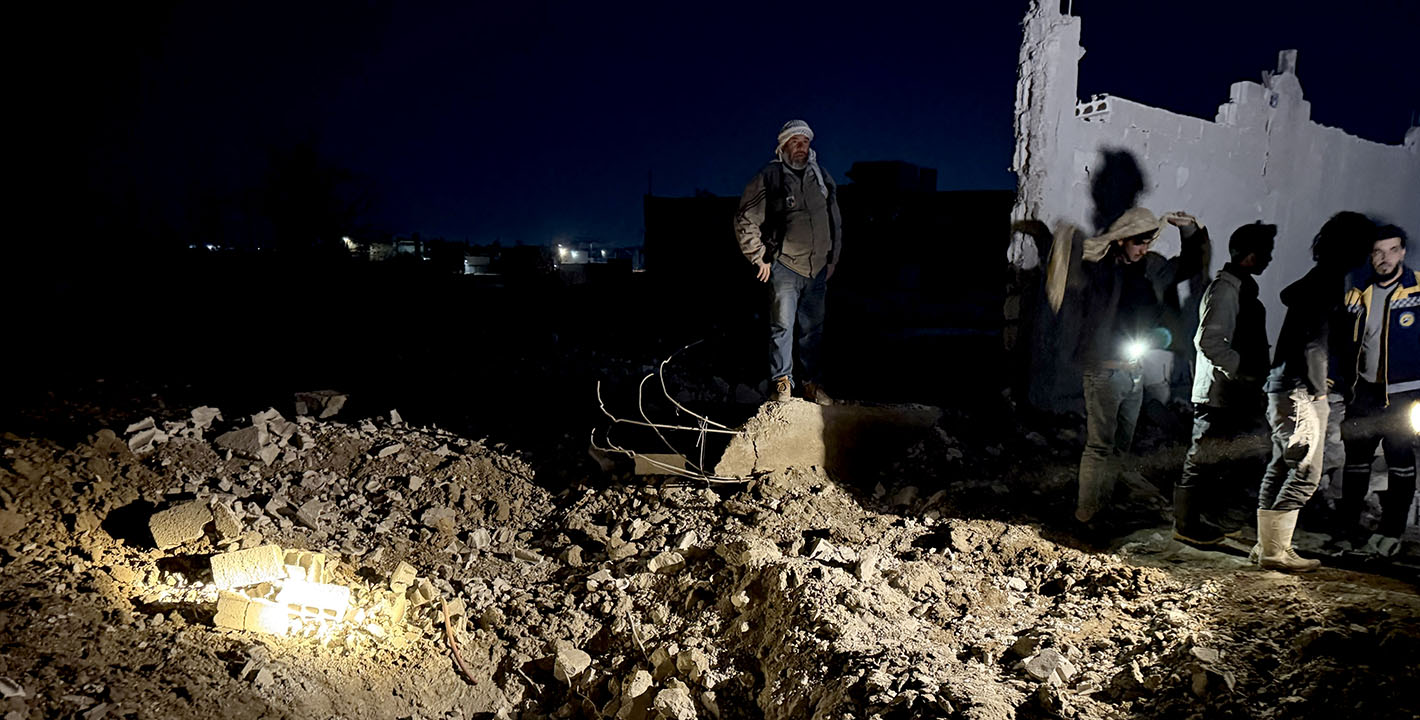
Source: Getty
In an interview, Kheder Khaddour explains that Damascus is trying to stabilize its borders, but avoiding war isn’t guaranteed.
Kheder Khaddour is a nonresident scholar at the Malcolm H. Kerr Carnegie Middle East Center in Beirut. His research is focused on civil-military relations and local identities in the Levant, with a concentration on Syria. Diwan interviewed him in mid-March to get his perspective on the conflict between the United States and Israel on the one side, and Iran and its regional allies on the other, and the repercussions this has had on Syria and the regime of Ahmad al-Sharaa.
Michael Young: Syria has been a rare case of a country on the sidelines of the ongoing conflict in the region. Why is that the case?
Kheder Khaddour: Syria appears to be on the sidelines of the war only in the narrow military sense. It is not a main front such as Iran or Lebanon, but it is certainly not outside the war’s repercussions. The weakening of Hezbollah and the erosion of Iran’s infrastructure that had used Syria as a corridor toward Lebanon altered the regional environment on which the regime of Bashar al-Assad had relied, contributing to its downfall in December 2024. The new authorities in Damascus came to power with one overriding concern: to prevent Syria from again becoming a front for regional conflicts. That is why, since the conflict with Iran began, the Syrian authorities have focused more on managing the spillover from that conflict than on direct involvement in it. They have done so by reinforcing their presence along the Lebanese and Iraqi borders, tightening control over border crossings, and preventing the movement of weapons and fighters. In this sense, Syria is not outside the war; rather, it is trying to manage its consequences without becoming one of its main battlefields.
MY: How have the different political forces in Syria reacted to the war?
KK: Reactions inside and outside Syria have varied according to where each actor stands in the new reality. The regime in Damascus has tried to present itself as a force for containment and control. Its focus so far has therefore been on borders, and on preventing regional tensions from spilling over into Syria. The Kurdish forces, for their part, have been primarily concerned with securing the terms of their integration into the Syrian state following the ceasefire agreement and their gradual accommodation with Damascus, more than with taking an independent position on the war itself. By contrast, the networks previously linked to Iran and Hezbollah, now largely based in Lebanon, appear to be on the defensive, both because Bashar al-Assad’s downfall severed the main supply line into Lebanon and because Hezbollah itself is facing unprecedented pressure there. In Syria’s south, meanwhile, local behavior remains shaped more by security calculations and Israeli pressure than by any unified Syrian political stance toward the war.
MY: You mentioned the deployment of Syrian forces to the border with Lebanon? Do you believe they will be used in an effort to enter Lebanon and squeeze Hezbollah?
KK: The deployment of Syrian forces along the Lebanese border cannot be read as an ordinary sovereign measure. This border is not simply a line separating two states, but rather an integrated security and social space. In the area of Qusayr in Syria and Hermel in Lebanon, which encompasses Lebanon’s northern Beqaa region, for example, smuggling networks, armed groups, family ties, and cross-border land ownership became intertwined during the civil war, with a military role performed by Hezbollah and the former Syrian regime. Assad’s ouster, therefore, created a security vacuum on both sides of the border. New Syrian forces have replaced those of the Assad regime and its allies in parts of this border strip, creating a fragile situation between a Lebanese state, which has historically been weak in those areas, and an emerging Syrian authority with an army still made up of former rebel factions, therefore that may take time to become fully institutionalized.
From this perspective, Syria’s heightened military posture is not aimed merely at closing the border in the legal sense, but at turning it from a logistical corridor into a line of control. Damascus wants to prevent this area from returning to its previous function—namely serving as a space through which weapons transfers take place, fighters are conveyed, and which could serve to reconnect Hezbollah to the Syrian interior. However, such objectives cannot be separated from the nature of the new Syrian authority itself. It wants to present itself as a state authority, yet it has not fully managed to form an institutional and neutral state apparatus. That is why its military deployment in the Beqaa is not seen as a purely technical measure, but one that is loaded with political, social, and sectarian implications.
For this reason, I would not exclude the possibility that this deployment could be used to pressure Hezbollah. Most likely, Syria’s interim president, Ahmad al-Sharaa, and his team do not seek a large-scale entry into Lebanon or a return to Syrian tutelage there. But that does not rule out more limited forms of cross-border action, such as localized operations or closer security coordination with the Lebanese state. What Damascus wants is not to open a new front, but to demonstrate that it can hold a monopoly over violence within Syrian territory and close the corridor once linking Lebanon to its eastern hinterland.
The problem, however, is that any attempt to impose a hard line of sovereignty on this border will run up against a local ecosystem based on mutual penetration rather than separation. The situation in the Beqaa finds an echo in Akkar and northern Lebanon, while some networks linked to the former Syrian regime may use Lebanese and border environments as a rear base for activities against the new regime, with repercussions in Homs or the Syrian coast. Any limited friction can therefore expand quickly, because this is not a border separating two states, but a single space in which geography, security, identity, and local networks overlap.
MY: In recent months we’ve heard of efforts—conducted by Türkiye—to reconcile the new Syrian leadership with Iran and Hezbollah. Is this confirmed, and if it is, what is the Turkish purpose in doing so, and what is Iran’s interest in this?
KK: So far, there is no reliable evidence to suggest that Türkiye is leading reconciliation between the new Syrian leadership and either Iran or Hezbollah in the full political sense. What seems clearer is that Ankara is moving along two parallel tracks. First, it is trying to consolidate the new authority in Damascus and support the extension of state control, including by containing the Kurdish file within the framework of the Syrian state.
Second, it is engaging with different parties in an effort to contain the regional war and prevent it from widening into broader disorder. From this perspective, if there are Turkish contacts with Tehran or with actors close to Hezbollah, they are more likely aimed at managing tensions and reducing risks than at building a new political axis. Iran’s interest, meanwhile, is probably more modest today: to ensure that the loss of Syria as an Iranian logistical and political node in the Mashreq does not become definitive, and to preserve whatever channels of influence remain after Assad’s downfall and the severing of Iran’s main supply line to Lebanon. Syria’s place in the regional order has changed, and it has effectively moved into the Western orbit, after decades when it was aligned with Iran.
MY: How do you see the situation in Lebanon affecting Syria, particularly what appears to be an Israeli intention to permanently close the Hezbollah file, militarily and otherwise?
KK: Lebanon affects Syria today because Hezbollah’s future is no longer merely a domestic Lebanese matter. For years, the Syrian-Lebanese border formed part of a single security structure that allowed the party to move, arm itself, and retain its eastern depth. If there is now an Israeli effort, reinforced by internal Lebanese calculations, to close this file both militarily and politically, that means in practice altering the function of Syria’s own border. The pressure on Syria, therefore, becomes twofold: on the one hand, it must prevent the reopening of the corridor that once linked Lebanon to its eastern hinterland in the region; on the other, it must manage the war’s direct spillover, from the temporary closure of crossings to the return of Syrian citizens from Lebanon as the fighting expands. So even if Damascus tries to remain outside the confrontation, developments in Lebanon are gradually pushing Syria toward playing a larger security role. The problem is that this role is expanding at a moment when the new Syrian state remains fragile, which means its efforts at containing the regional conflict may be overwhelmed, drawing Syria into more direct involvement in the conflict.
Lebanon’s impact on Syria, however, is not confined to the border or to immediate security concerns. It is also tied to the nature of the new authority in Damascus and to how it understands its place in the region. This authority does not see Hezbollah simply as a Lebanese actor, but as part of the wider system that fought it inside Syria for years—that is, as part of a Shiite political-military extension linking Iran to Iraq, Syria, and Lebanon. This matters because, from the perspective of Syria’s present rulers, the issue is not only about preventing smuggling or closing crossings, but also about preventing the reemergence of the environment that once allowed Hezbollah to operate within a single space in the Mashreq.
The paradox, however, is that the new authority is attempting to do this while it is still in the process of moving from being a factional authority to a state authority. It wants to present itself as a state that can secure a monopoly over violence and impose borders, yet it still lacks stable institutions and the broad economic and political margin needed to manage the repercussions of such a transformation. For this reason, developments in Lebanon may push Syria toward deeper involvement—not necessarily because Damascus wants to initiate a confrontation, but because its very weakness makes it more sensitive to any breach along the border, and more vulnerable to being drawn into a wider security and sectarian logic extending from the Beqaa Valley to Homs and perhaps to the Syrian coast.

Editor, Diwan, Senior Editor, Malcolm H. Kerr Carnegie Middle East Center
Michael Young is the editor of Diwan and a senior editor at the Malcolm H. Kerr Carnegie Middle East Center.
Recent Work
Michael Young
Michael Young
Carnegie does not take institutional positions on public policy issues; the views represented herein are those of the author(s) and do not necessarily reflect the views of Carnegie, its staff, or its trustees.
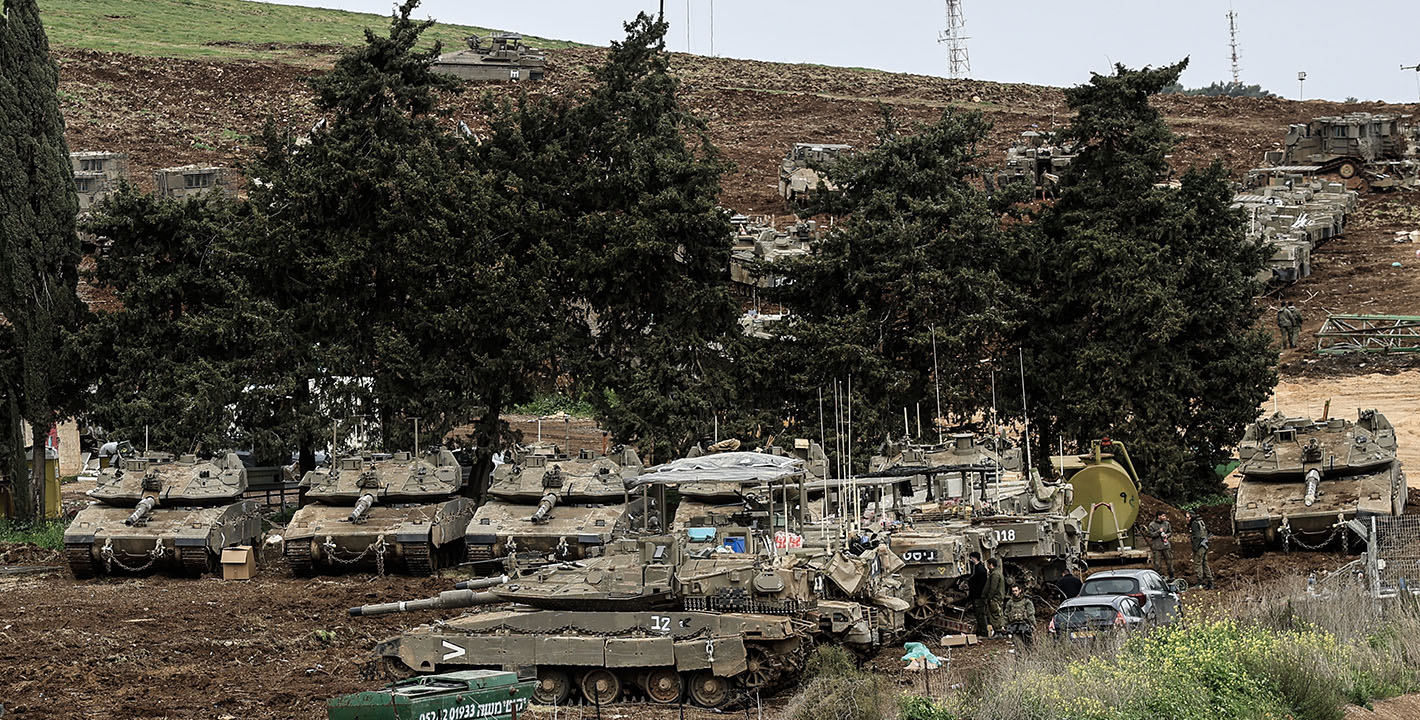
The country’s strategy is no longer focused on deterrence and diplomacy, it’s about dominance and degradation.

Nathan J. Brown
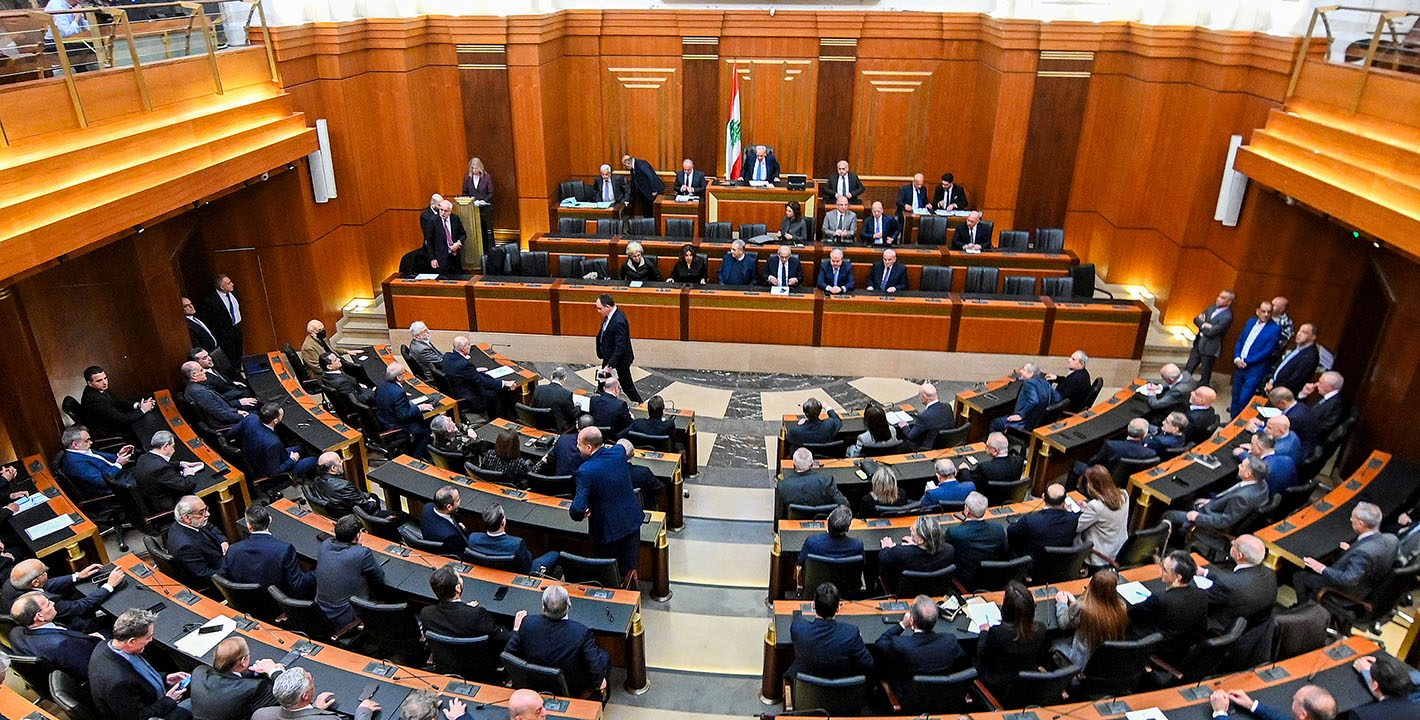
The decision of Lebanon’s parliament may look exceptional, but in reality it is not.

Issam Kayssi
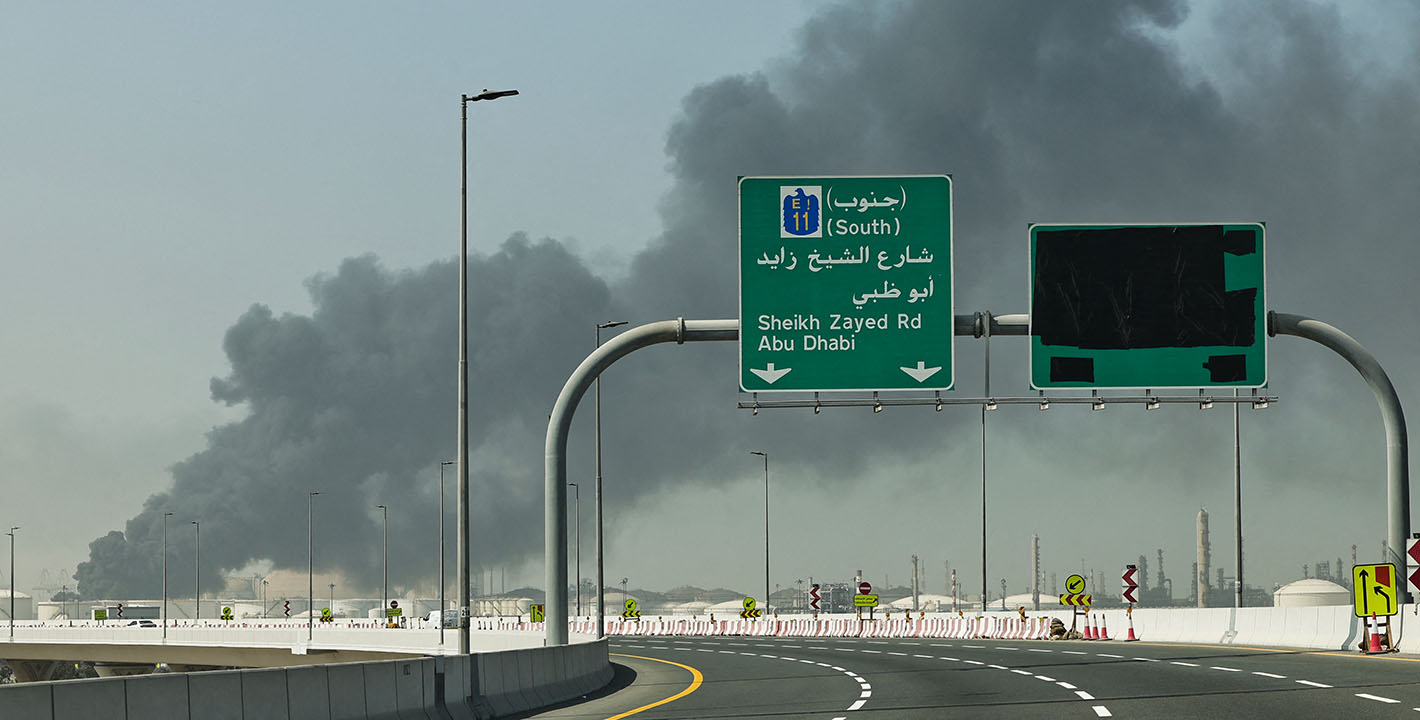
The countries in the region are managing the fallout from Iranian strikes in a paradoxical way.

Angie Omar

In an interview, Hassan Mneimneh discusses the ongoing conflict and the myriad miscalculations characterizing it.
Michael Young
In an interview, Nicole Grajewski discusses the military dimension of the U.S. and Israeli attacks on Iran.
Michael Young