

Paper
Pekka Sutela
{
  "authors": [
    "Pekka Sutela"
  ],
  "type": "other",
  "centerAffiliationAll": "dc",
  "centers": [
    "Carnegie Endowment for International Peace",
    "Carnegie Russia Eurasia Center"
  ],
  "collections": [],
  "englishNewsletterAll": "ctw",
  "nonEnglishNewsletterAll": "",
  "primaryCenter": "Carnegie Endowment for International Peace",
  "programAffiliation": "russia",
  "programs": [
    "Russia and Eurasia"
  ],
  "projects": [],
  "regions": [
    "Caucasus",
    "Russia",
    "North America"
  ],
  "topics": [
    "Economy"
  ]
}
Source: Getty
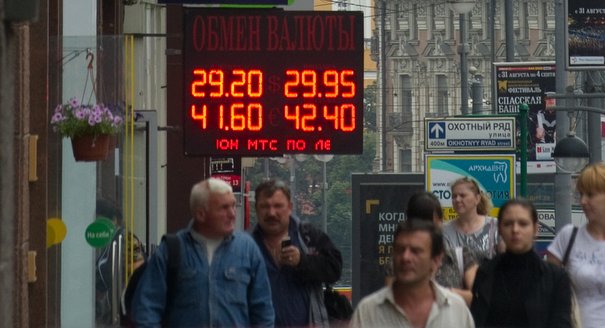
While Russia’s short-term economy will largely depend on oil prices and the country’s demographic challenges, its medium-to-long-term outlook will be influenced by the lessons that leaders take from the crisis, which will affect Russia’s economic structure and policies for many years to come.
While the timing and extent of the global financial crisis surprised many countries, Russia was generally prepared. Its macroeconomic management of the recession rightly earned accolades from several international organizations.
But Moscow’s industrial and social policy responses were not as praiseworthy, representing yet another victory of political tactics over economic strategy. Although Russia’s leaders saw the crisis as vindicating their past policies—including the reform strategies they devised from 2006–2008—most of the structural issues in Russia’s economy remain, with solutions likely delayed for several years. Russia’s fiscal decline— from an average of 7 percent annual growth before the crisis to a loss of 7.9 percent GDP in 2009—is the highest figure among G20 countries.
Russia’s economy in the near term will largely depend on oil prices and how Moscow handles the country’s demographic challenges. But the economy’s medium-to-long-term outlook will be influenced by the lessons that leaders take from the crisis, which will affect Russia’s economic structure and policies for many years to come.
Former Nonresident Senior Associate, Russia and Eurasia Program
Sutela was a nonresident senior associate in the Carnegie Endowment’s Russia and Eurasia Program, where his research focuses on the economies of Eurasia, especially Russia.
Recent Work
Pekka Sutela
Pekka Sutela
Carnegie does not take institutional positions on public policy issues; the views represented herein are those of the author(s) and do not necessarily reflect the views of Carnegie, its staff, or its trustees.
The United States ignores the region’s lived experience—and the tough political and social trade-offs the war has produced—at its peril.

Evan A. Feigenbaum

The prospect of a total block on Russia’s most popular messaging app has sparked disagreement between the regime’s political managers and its security agencies.

Andrey Pertsev

The GDP measure is an attempt to measure value creation in an economy. This measure, however, can vary greatly between economies that have disciplinary mechanisms that force them to recognize investment losses quickly and economies that don’t, and can postpone this recognition for many years.

Michael Pettis
Ukraine’s asymmetric approach has rendered Russia’s Black Sea Fleet functionally useless. But a long-term commitment will be needed to maintain this balance of power.
Alina Frolova, Stepan Yakymiak

As the Iran war shocks oil prices, countries that have invested in renewables, EVs, and battery development since the 2022 Russian invasion of Ukraine are seeing the value of their investments.

Noah Gordon